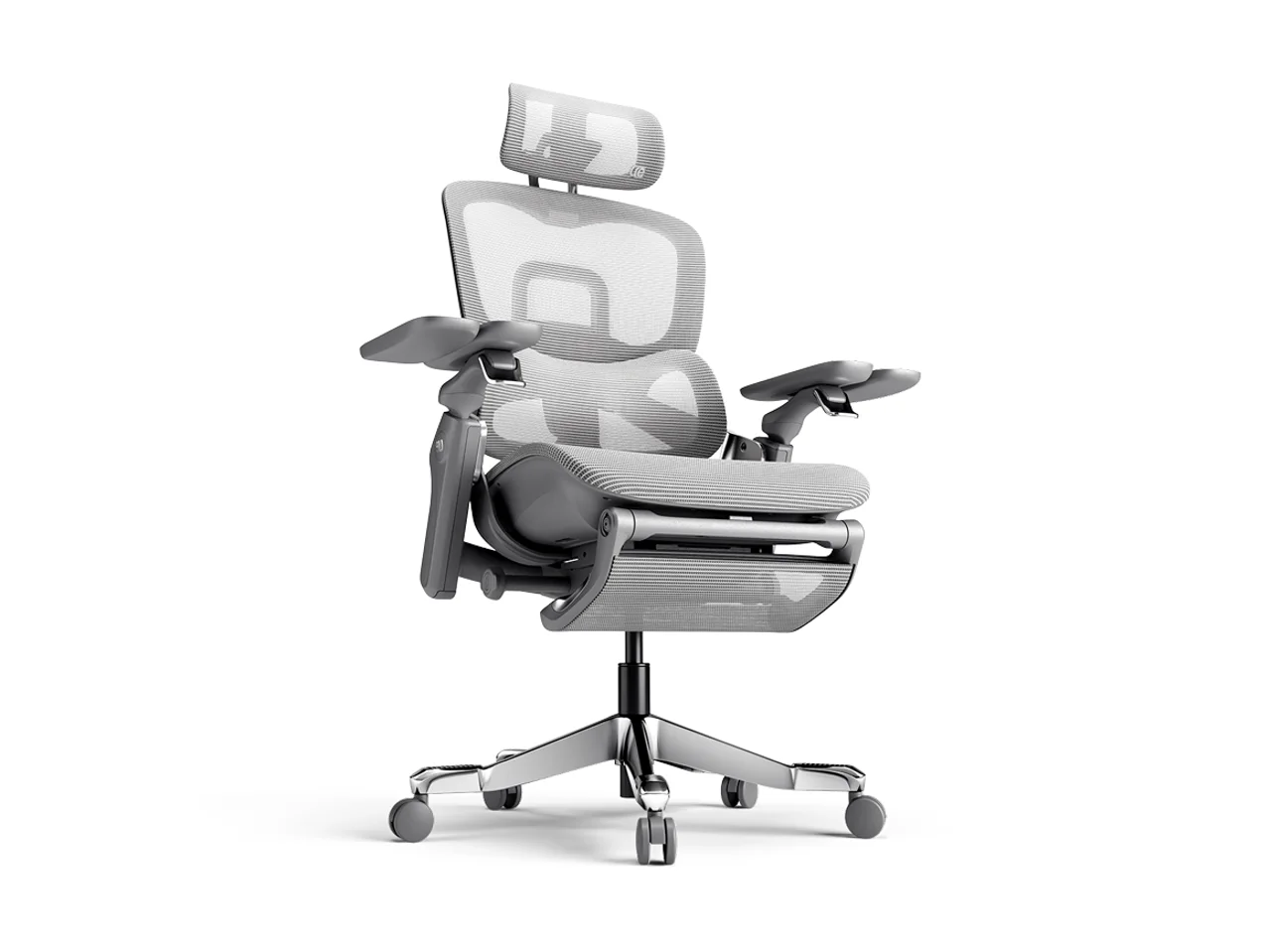
Ask a buyer what makes a chair "contract grade" and most will say the foam or the frame. Closer to the truth: it is whether you can still repair it in year five. A home chair gets sold and forgotten. A contract chair has to stay in service for years, through different users and a facilities team that swaps worn parts — and that changes what we build and what you should ask for before you commit a container.
The warranty gap is real
A home-use office chair often ships with around a one-year warranty that covers only specific parts. Commercial chairs sit in a different band entirely: the trade guides put contract warranties commonly at five to twelve years, and crucially they cover the parts that actually fail — the mechanism, the frame and the gas lift — not just "manufacturing defects" in the upholstery. If a supplier quotes you a contract chair with a one-year, defects-only warranty, that is a home chair wearing a contract label, and the gap will surface the first time a mechanism wears out in month fourteen.
What "repairable" really means
Contract furniture is defined less by how it looks than by what comes apart. The arms, the casters, the glides, the seat pad, the gas lift, the mechanism — on a true contract chair these are replaceable modules, so a facilities team swaps a worn caster instead of binning the chair. That is the difference between a five-year asset and a twelve-month consumable. Before you commit to a large order, the question to ask any factory — including us — is simple: are replacement parts available for the full warranty period, and how fast can you ship them? A long warranty with no parts behind it is a marketing number.
Which parts to carry as field spares
Not every part fails at the same rate, so you do not need to stock everything. The high-turnover items are casters and gas lifts — casters wear on hard floors and gas lifts are the part most likely to sink or fail under heavy daily use. Mechanisms fail less often but cost more and take longer to source, so for a large contract program it is worth carrying a few. Armrest pads and caps are cheap and easy to keep on a shelf. We will give you a realistic failure-rate view for the specific chair so you carry the right spares rather than guessing — over-stocking ties up cash, under-stocking leaves your client waiting on a container for one caster.
Read the warranty's exclusions, not its headline number
A "12-year warranty" headline means little until you read what it excludes and how it is administered. The questions that matter: does it cover the gas lift and the mechanism or only the frame; is the cover pro-rated so year-ten support is a fraction of the value; does a claim require shipping the whole chair back, or do you ship a part; and who pays the freight on a replacement part. For a contract program the practical model is parts-forward — the factory ships the module, the facilities team fits it — because returning chairs across a border for a worn caster makes no commercial sense. We write the cover and the claim process into the quote so there is no argument later about what "warranty" meant.
The trade-off, stated plainly
Designing for repairability costs more up front. Modular arms and a serviceable mechanism are more expensive to tool and assemble than a chair that is glued and riveted shut. For a budget home line, the sealed chair is the honest choice — nobody is going to repair a sub-$60 chair, so building it for repair wastes money the buyer will not recover. For a contract order, the calculation flips: the cheaper sealed chair becomes a full replacement and a freight cost the moment one part fails, while the repairable one costs a caster and a screwdriver. We would rather build the right one for the channel than win a quote that costs your client more over the chair's life.
How we set it on your order
We stock and ship spare parts for the chairs we make, and we will state the parts list and lead time in writing before you order — not after a claim lands. For contract programs we recommend the modules worth carrying as field spares so your client is never grounded by a single part. The gas-lift duty and the motor duty cycle on the desks feed into the same durability conversation, and the armrest mechanisms are exactly the kind of part that should be a swap, not a scrap. We build to BIFMA / EN methods and third-party testing can be arranged.
Tell us the use case and the warranty your client expects, and we will spec a chair that can actually carry it — and quote the spare-parts plan alongside the unit price. Start on our contact page or read how we run private-label builds on our ODM / OEM page.